Journey to the West:
Harnessing the Chaos

Sun Wukong’s Ambition and the Path to Enlightenment in Journey to the West

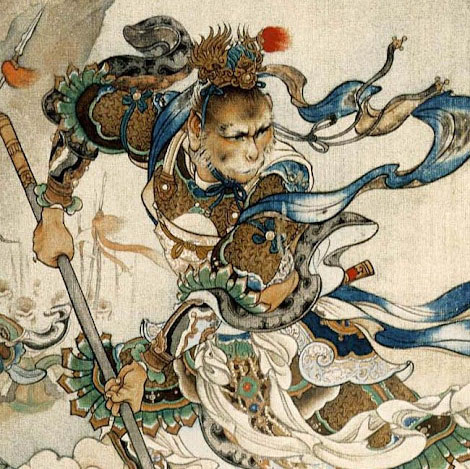
Sun Wukong Illustration
"Sun Wukong," Gwong Zau Kung Fu.

Written during the Ming dynasty, a time of synthesis between Confucianism, Daoism, and Buddhism, Journey to the West by Wu Cheng'en’s (吴承恩) is more than a fantasy adventure, but also an allegory for the human spiritual pilgrimage through life. Each of the different main characters represents different facets of human nature, and their journey with the Tripitaka shows how Buddhist ideals can influence one’s facets for the better. In this exhibition, we will take a journey on how Wukong’s dual nature of ambition evolved throughout his journey, from when he was a mere mortal striving to become stronger than those in heaven, to his many adventures with Tripitaka where he is humbled and shown how to redirect his ambition into spiritual goals. This transformation underscores a key message of the novel: ambition, when guided by discipline and wisdom, can transform from mindless violence and chaos to a powerful tool for spiritual enlightenment.

Description of Image 2
DALL·E, “Abstract Representation of Sun Wukong’s Spiritual Journey.”

The story of Sun Wukong in Journey to the West serves as a profound allegory for the human pilgrimage. The most important facet of human nature that Sun Wukong represents is Ambition. Ambition is shown to be double-edged swords for one’s spiritual pilgrimage: The story illustrates that when unchecked, ambition and ego can hinder spiritual progress and one’s journey as a successful “pilgrim” in life, but through discipline and self awareness, these tools can be transformed into powerful tools for growth.

“'The Jade Emperor,' said Monkey, 'has no regard for talent. He made me a groom in the stables!'”

Wu, Ch’êng-ên. Monkey [西遊記 Xī yóu jì]. Ch. IV, 47.

Sun wukong’s ambition can be seen from the start of the novel, when he relentlessly pursues immortality and power. From Wukong’s comments on his role as a horse keeper, he is clearly not satisfied with a role in heaven even as a mortal. Wukong recognizes himself as being filled with talent and potential. His ambition is focused on breaking his personal mortal limitations and achieving his insatiable desire for status and recognition, seen from his self proclaimed title of “Great Sage Equal to Heaven.” This title shows Wukong’s ambition to assert dominance and equality with divine beings. We can see the double edged nature of ambition through his acts stemming from ambition not bound by wisdom or ethics in the starting acts of the book causing destructive outcomes. The evolution of his ambition as his story progresses is through the guidance of Tripitaka. The golden headband symbolizes his submission to Tripitaka's authority and marks a turning point in the direction of Wukong’s ambition. After meeting his master, his ambition is no longer directed towards his personal goals but instead towards helping the group retrieve the sacred scriptures and bring enlightenment to the world.

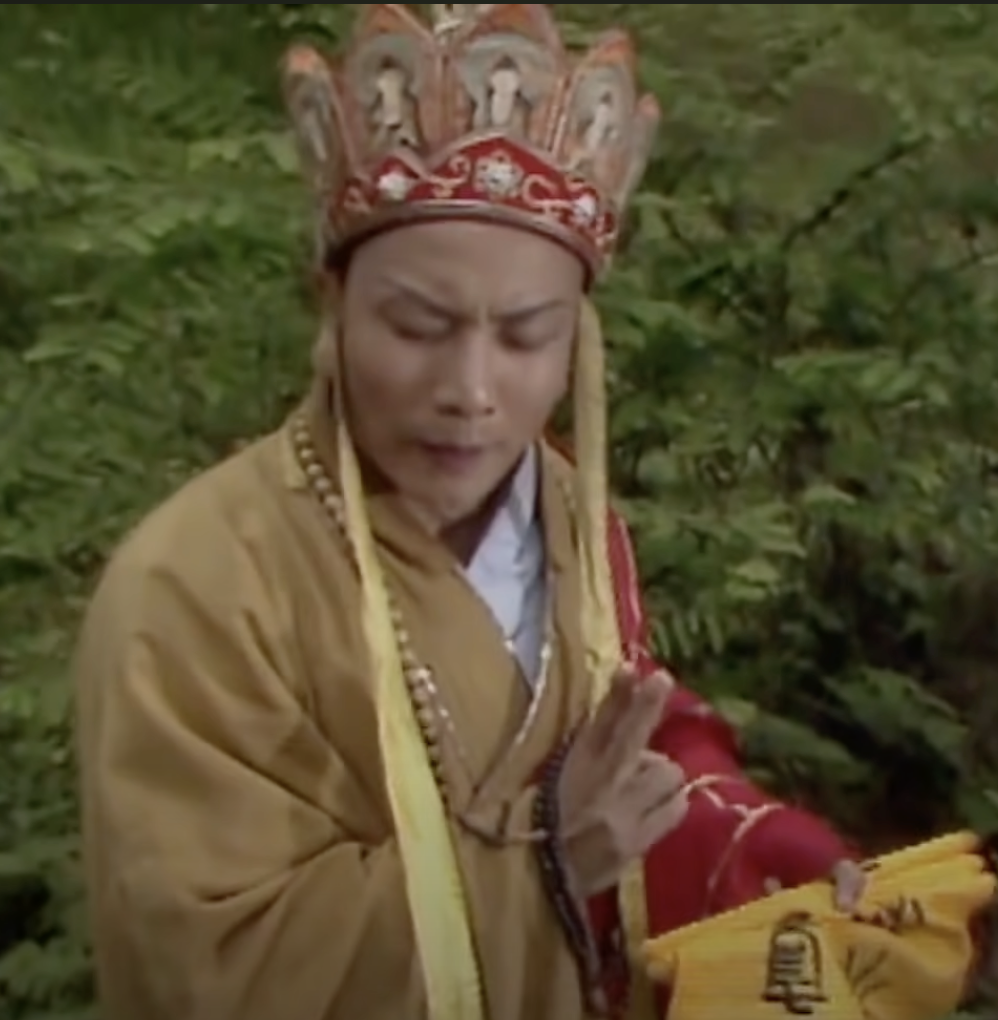
“Then he came back to Tripitaka and said laughing, 'Master, we can start now; I have killed them all.' 'I am very sorry to hear it,' said Tripitaka. 'One has no right to kill robbers, however violent and wicked they may be. The most one may do is to bring them before a magistrate. It would have been quite enough in this case if you had driven them away. Why kill them?”

Wu, Ch’êng-ên. Monkey [西遊記 Xī yóu jì]. Ch. XIV, 132.

From this interaction during the early part of Wukong’s journey with the Tripitaka, we can see Wukong still has the ambition to do all that is in his power to protect his new master by using his might to kill all those that crossed them. Tripitaka attempts to adjust the focus of Wukong’s ambition from meaningless violence to peace, and he educates that violence must not be answered with violence, acts that Wukong did often as the Great Sage of Heaven. This moment is pivotal as it introduces Wukong to a new way of thinking where ambition is not fulfilled by physical dominance but by restraint and moral judgment. Here, Tripitaka’s guidance towards Wukong parallels the effect of Buddhism in one’s spiritual “pilgrimage.”

Description of Image 2
Yang Jie, Journey to the West, Episode 10.

While Buddhism does not see ambition as a naturally negative facet of human nature, it argues that it must be aimed towards the right virtues and be noble in purpose. This focus towards direction can be seen in The Dhammapada, in verse 100 and 101: “Better than a thousand useless words is one useful word, hearing which one attains peace,” “Better than a thousand useless verses is one useful verse, hearing which one attains peace.” Buddhist scripture emphasizes the importance in direction and focus of one’s ambition, arguing for quality over quantity is what one should strive for. It also highlights the transformative power of purpose driven action, as seen from Wukong’s shift from reckless ambition to purposeful action towards a sacred goal. Wukong’s transformation can be seen as both from quantity over substance to quality over quantity, as well as from chaos and anger to peace and enlightenment. Through Tripitaka’s teaching, Wukong finds that a thousand violent acts that cause chaos is less meaningful than one act of peacefulness.

Description of Image 2
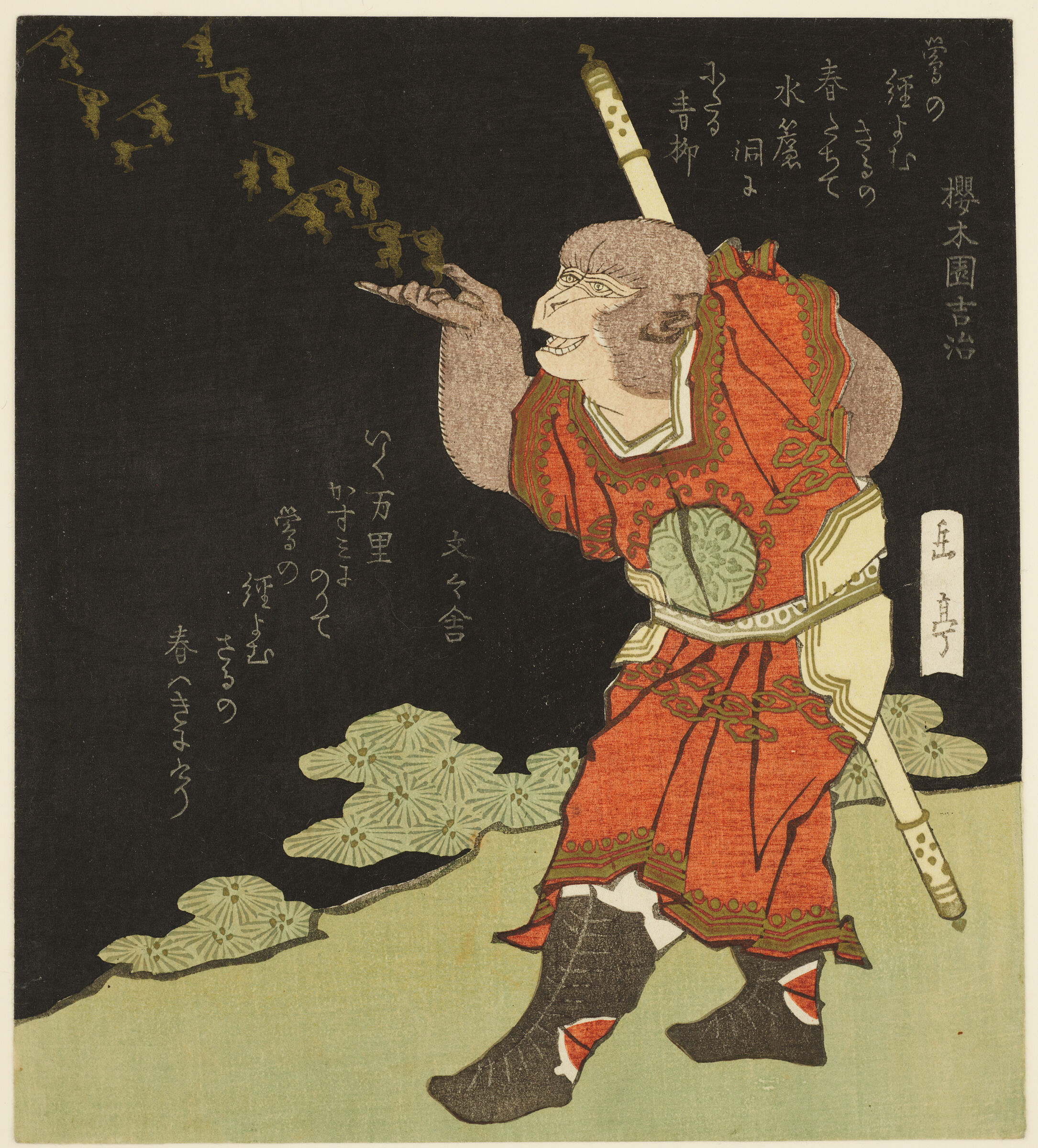
Yashima Gakutei, The Monkey King Sun Wukong, 1824, Harvard Art Museums.

Sun Wukong’s story in Journey to the West demonstrates the complex and double edged nature of ambition in human nature. Before Wukong’s journey with the Tripitaka, he embodied ambition unchecked by ethical or moral considerations, resulting in chaos and destruction. Under the guidance of Tripitaka, his ambition evolves into a disciplined and powerful force aimed at a noble goal. This evolution mirrors the teachings of Buddhist scripture like the Dhammapada, which emphasize the direction of action and ambition. One thousand acts of violence does not equate to even one act of peacefulness. Through the guidance of Tripitaka, a representation of Buddhist thoughts, Wukong is set on a path which rewards him with more fulfillment and purpose. Wukong’s journey serves as a reminder that when ambition is paired with guidance and ethical purposes, it can not only lead to personal growth but also spiritual fulfillment.

Works Cited